

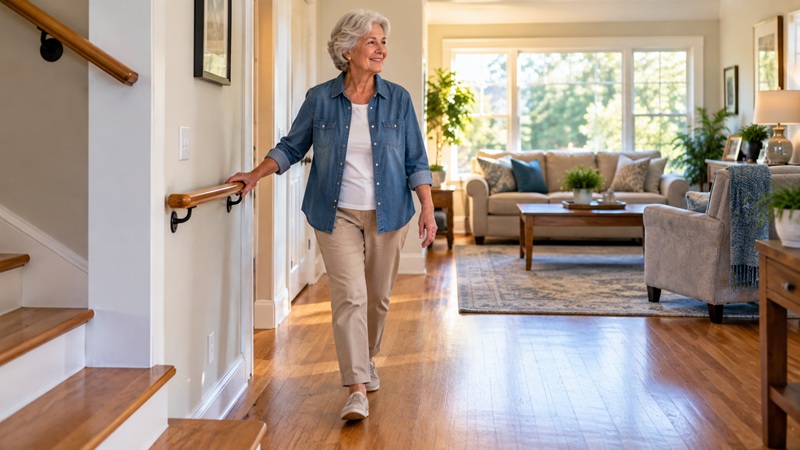
Home Safety Checklist for Seniors
Falls are one of the biggest risks to staying independent at home, and many of them can be prevented. The CDC reports that more than one in four people age 65 and older fall each year, and that falling once doubles the chance of falling again. Yet less than half of older adults tell their doctor about a fall.
The good news is that many hazards are simple to find and cheap to fix.
Use the room-by-room checklist below. Print it, walk through your home with a pen, and tackle the easy fixes first.
Quick take
- Most home fall hazards are tripping risks, poor lighting, and slippery bathroom surfaces.
- The three highest-impact fixes are usually grab bars, better lighting, and removing loose rugs.
- Review this list twice a year, and again after any illness, surgery, or fall.
Entrances, hallways, and stairs
- Remove throw rugs, or secure them with non-slip backing or rug tape.
- Clear walkways of cords, shoes, boxes, and clutter.
- Make sure hallways and stairs are brightly lit, with switches at both the top and bottom of stairs.
- Add motion-activated night lights along common paths.
- Check that stairs have sturdy handrails on both sides, with no loose or uneven steps.
- Mark the edges of steps with contrasting tape so they are easier to see.
- Keep outdoor steps and entrances lit and clear of ice, leaves, and wet debris.
Products that help: A key turner aid makes locks easier on arthritic hands, and a grabber and reacher tool saves bending to pick up mail or dropped items.
Bathroom
The bathroom is where wet surfaces and hard fixtures meet, so it deserves the most attention.
- Install grab bars in or beside the tub or shower and next to the toilet. Towel bars are not designed to hold your weight.
- Make sure grab bars are mounted into wall studs or with anchors rated for the load, not held by suction alone.
- Put a non-slip mat or adhesive strips inside the tub or shower, and a non-slip-backed mat outside it.
- Consider a shower chair or transfer bench so you can sit while bathing.
- Raise the toilet height or add safety rails if standing up is difficult.
- Set the water heater to 120 degrees F or lower to reduce scald risk.
- Add a night light between the bedroom and the bathroom.
Products that help:
- Bathroom grab bars: the single most useful safety upgrade for most bathrooms.
- Bath mats for seniors: grip underfoot where it is wettest.
- Toilet safety rails and toilet height extenders: easier sitting and standing.
- Sliding bath transfer bench: lets you enter the tub without stepping over the edge.
- Long-handled bath brush: reduces reaching and balancing.
Bedroom
- Keep a lamp, flashlight, or night light within reach of the bed.
- Keep a phone within reach of the bed.
- Clear a straight path from the bed to the bathroom.
- Check the bed height: your feet should rest flat on the floor when seated on the edge.
- Sit on the edge of the bed for a moment before standing up.
- Store clothes and shoes between waist and shoulder height so you do not have to bend or climb.
- Remove loose rugs and anything that can catch a foot.
Products that help: A step stool for getting into bed for tall beds, a long-handled shoehorn and button hook for dressing, and a grabber tool for items on the floor or a high shelf.
Kitchen and living areas
- Keep everyday items between waist and shoulder height.
- Never stand on a chair. If you need a step, use a sturdy step stool with a handrail.
- Wipe up spills right away and consider a non-slip mat in front of the sink.
- Choose chairs with a firm seat and arms so you can stand without pushing hard.
- Arrange furniture so walkways are wide and clear, and tuck cords out of the way.
- Watch for pets underfoot, and consider a bell on the collar.
Products that help: Non-slip placemats and a two-handled mug reduce spills, and an easy jar opener saves strain and slips.
Alerts and emergencies
- Install smoke and carbon monoxide alarms on every level and outside sleeping areas. Test them monthly.
- Keep emergency numbers in large print near each phone.
- Keep a fire extinguisher in the kitchen and know how to use it.
- Leave a spare key with a trusted neighbor, friend, or family member.
- Keep an up-to-date medication list where responders can find it.
- If you live alone or have had a fall, consider a medical alert device.
Products that help: A smoke alarm for the hearing impaired, a pill organizer to keep medications straight, and a medical alert bracelet or system.
Everyday habits that lower fall risk
Home changes work best alongside a few habits. These match the basics the CDC emphasizes: talk to your healthcare providers, stay active, and make your home safer.
- Wear sturdy, well-fitting shoes with non-slip soles. Avoid walking in socks or loose slippers.
- Stay active. Strength and balance exercise helps; see my easy stretching exercises and tai chi for seniors.
- Review medications with your doctor or pharmacist. Some can cause dizziness or drowsiness.
- Get your vision checked every year, and use good lighting for reading and walking.
- Stand up slowly, especially after sitting or lying down for a while.
For more on this, read my guide to fall protection for seniors.
When to ask for a professional home assessment
If you or a loved one has had a fall, has trouble getting around, or is recovering from surgery, ask your doctor about a home safety evaluation by an occupational or physical therapist. They can spot problems that are easy to miss and recommend changes that suit your needs. Your local Area Agency on Aging may also have resources, and coverage for assessments and equipment varies, so check with your doctor and insurance plan.
Frequently asked questions
What causes most falls at home?
Common causes include tripping hazards like rugs, clutter, and cords; poor lighting; and slippery bathroom surfaces. Health factors such as weak muscles, balance problems, vision changes, and some medications also raise risk.
Where should grab bars go?
Inside and beside the tub or shower, and next to the toilet. They should be mounted into wall studs or with anchors rated for the load. Towel bars are not meant to support body weight.
Are suction cup grab bars safe?
They can loosen, so many safety experts recommend permanently mounted bars for primary support. Suction versions are better treated as a temporary or travel option.
How often should I review my home for hazards?
At least twice a year, and again after any illness, hospital stay, surgery, or fall.
Should I tell my doctor if I fall, even if I am not hurt?
Yes. A fall can signal a problem with balance, medication, or vision that is worth checking, and falling once raises the chance of falling again.
Who can help me make changes if I cannot do them myself?
Family, a handyperson, an occupational therapist, or your local Area Agency on Aging can help with installation and recommendations.
Printable checklist
[Download the one-page checklist (PDF)]
The printable version covers the 12 highest-impact items: remove loose rugs, clear walkways, add lighting and night lights, install handrails, mount grab bars, add non-slip bath mats, raise the toilet or add rails, keep a phone and light by the bed, store items at waist-to-shoulder height, test smoke alarms, post emergency numbers, and review medications with your doctor.
My Home Safety Experience
When an older family member moved in with us, I started looking at our home in a new way. She used a walker, and I quickly noticed how many ordinary things get in the way: [one real example, such as a rug, a doorway threshold, tight spaces, or a cluttered hallway].
I have my own history with falls, too. None of mine were serious, but they were painful, and each one showed me how fast a small hazard can ruin a day. Most of my falls were caused by moving too fast, and because of that, I lost my balance.
So these days I start with the basics: clear walkways, good lighting, and enough room to walk. Looking back, decluttering the house is where I would begin again.
If you are making changes for a parent or for yourself, start with lighting, rugs, and the bathroom, then work through the rest of the checklist at your own pace. I would love to hear what has worked in your home.
Feel free to leave a comment or use the contact page.
Health Disclaimer: The information in this article is provided for general educational purposes only and is not intended as medical advice, diagnosis, or treatment. Individual health needs vary, and nutritional information may not apply to everyone. Always consult a qualified healthcare professional if you have questions about your diet, a medical condition, or changes that could affect your health. Do not disregard professional medical advice or delay seeking it because of information in this article.
Related reading: Fall protection for seniors | Bathroom grab bars | Toilet safety rails | Best grabber and reacher tool
Sources and further reading
- CDC: Older Adult Fall Prevention (cdc.gov/falls)
- CDC: STEADI, Stopping Elderly Accidents, Deaths & Injuries (cdc.gov/steadi)
- CDC: Check for Safety, A Home Fall Prevention Checklist for Older Adults
Eddie Vandam
About the Author: Eddie Vandam
Eddie Vandam is a proud senior and retired internet marketer who now dedicates his time to helping others age well. As the voice behind the Senior Citizen Website, he shares practical advice on staying healthy, independent, and informed. From product reviews to wellness tips and hobbies that keep life interesting, Eddie writes with real-world experience and a passion for making senior life easier and more enjoyable.👉 Read more about Eddie Vandam.


