
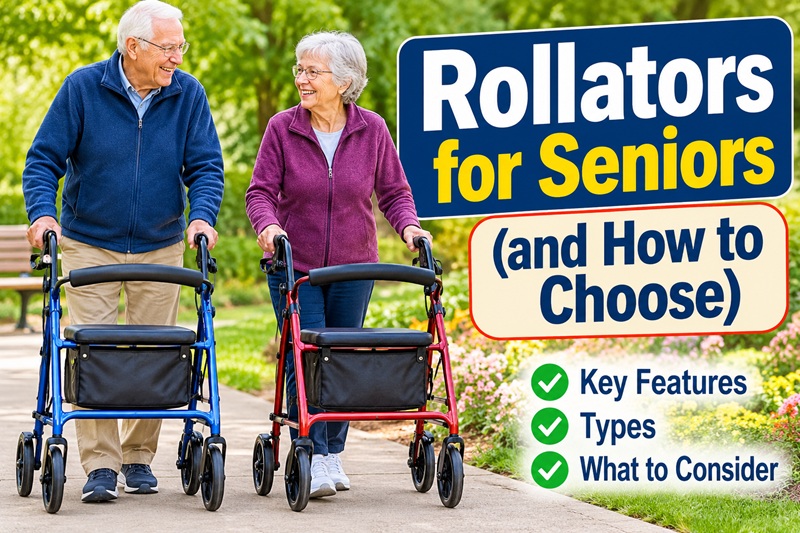
Best Rollators for Seniors (and How to Choose)
Finding the best rollators for seniors is harder than it looks. There are dozens of models, and the wrong one can be too heavy to lift, too low or too high to be comfortable, or unsuited to where you actually walk. Below are the rollators I researched and recommend, followed by a simple guide to choosing the right one.
When an older family member who uses a walker moved in with us, I started paying much closer attention to how these devices work in real life. Things such as door width and thresholds. But also the weight for placing it in the car.
I base my picks on research and customer reviews, not on hands-on testing of every model.
This is general information, not medical advice. A doctor or physical therapist should recommend a device and check the fit. If you are not sure a rollator is right for you, read my guide to cane vs walker vs rollator first.
Quick take
- For the lightest option, my pick is the Healthline lightweight rollator at about 14 pounds.
- For the widest seat and handle adjustment, look at the Medline mobility walker.
- For the highest weight limit among my picks, look at the Medical rollator (Euro-style).
- For sand, gravel, and other soft surfaces, you need a rollator with larger all-terrain wheels like the beach rollator below.
The best rollators for seniors at a glance
| Pick | Best for | Weight | Weight limit | Seat height | Wheels |
|---|---|---|---|---|---|
| Healthline lightweight rollator | Lightest option | About 14 lb | [Check listing] | 18.5 to 22 in | 6 in |
| Medline mobility walker with seat | Adjustability | 16.5 lb | 250 lb | 18 to 23 in | 6 in |
| Medical rollator (Euro-style) | Higher weight limit | About 17 lb | 300 lb | 21 in (fixed) | 8 in front, 7 in rear |
| Beach rollator | Sand, gravel, and snow | About 25 lb | [Check listing] | [Check listing] | 11.8 in front, 9.4 in rear |
Specs are from my reviews and the manufacturers’ listings. Models and specifications change, so check the current listing before you buy.
How I chose these rollators
- Adjustability: adjustable handle and seat height, so it fits more body sizes.
- Build quality: sturdy materials and working brakes.
- Weight: light enough to lift into a car, but not so light that it gives up weight capacity.
- Customer feedback: I look for products that real buyers rate at about 4 stars or higher, and I read the complaints, not just the praise. [Update with current ratings before publishing.]
Healthline lightweight rollator: lightest option
Best for: people who need to lift or fold their rollator often.
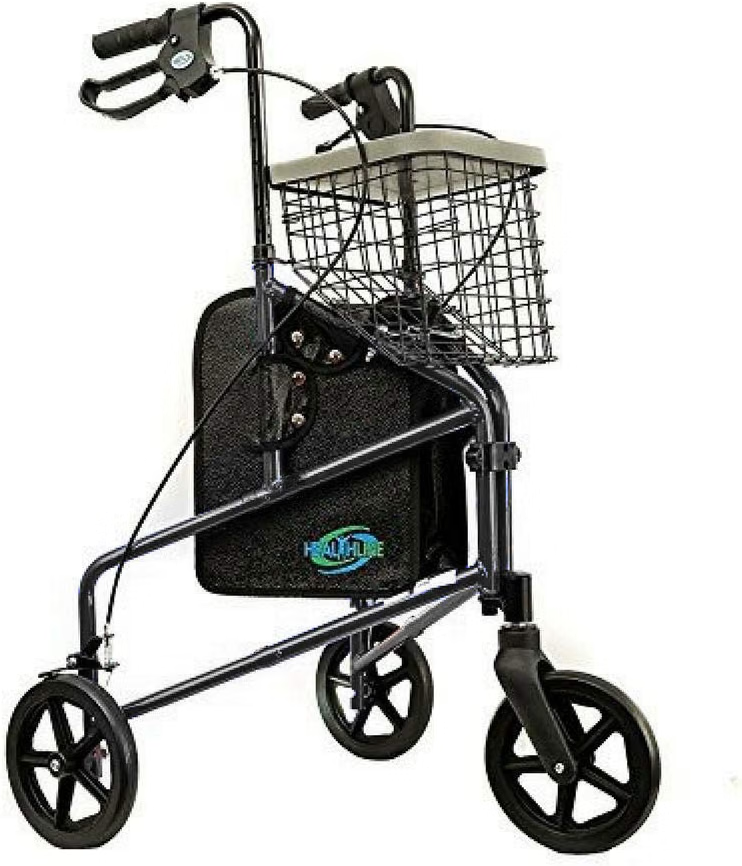
- Weight: about 14 pounds, the lightest of my picks
- 6-inch wheels with safety brakes
- Seat height adjustable from 18.5 to 22 inches
- Handle height adjusts through the legs and the handles
What I like: it is the lightest of the group and still has a seat, so it is easier to lift into a car. Keep in mind: the details on the sales page are limited, so confirm the weight limit and dimensions before you order.
The current price is around $125, and I found an average of 4.5 stars
Check price on Amazon | Read my full review of lightweight walkers with a seat.
Medline mobility walker with seat: best adjustability
Best for: people who are shorter or taller than average and need a close fit.
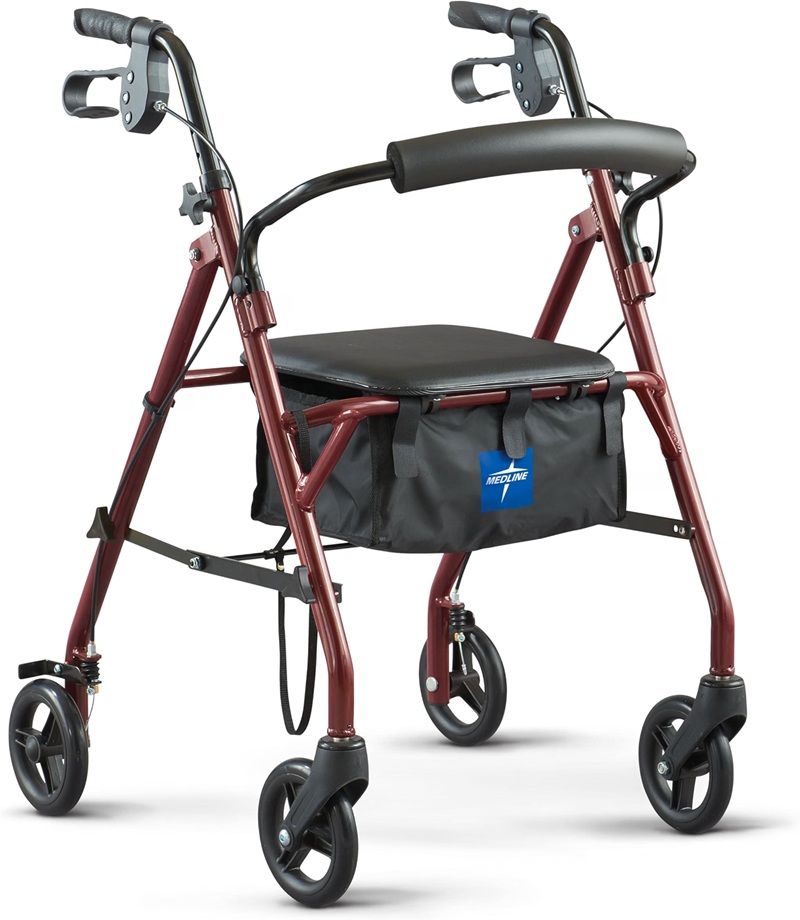
- Weight: 16.5 pounds, aluminum frame
- 6-inch wheels
- Seat height adjustable from 18 to 23 inches
- Overall handle height adjustable from 29 to 36 inches
- Weight limit: 250 pounds
What I like: the adjustment range is wide, so it suits many different heights. Keep in mind: like most lightweight rollators, its weight limit is lower than a heavy-duty model’s. [Add current rating and price.]
Check price on Amazon | Read my full review of lightweight walkers with a seat.
Medical rollator (Euro-style): higher weight limit
Best for: people who need a higher weight limit than most lightweight rollators offer.
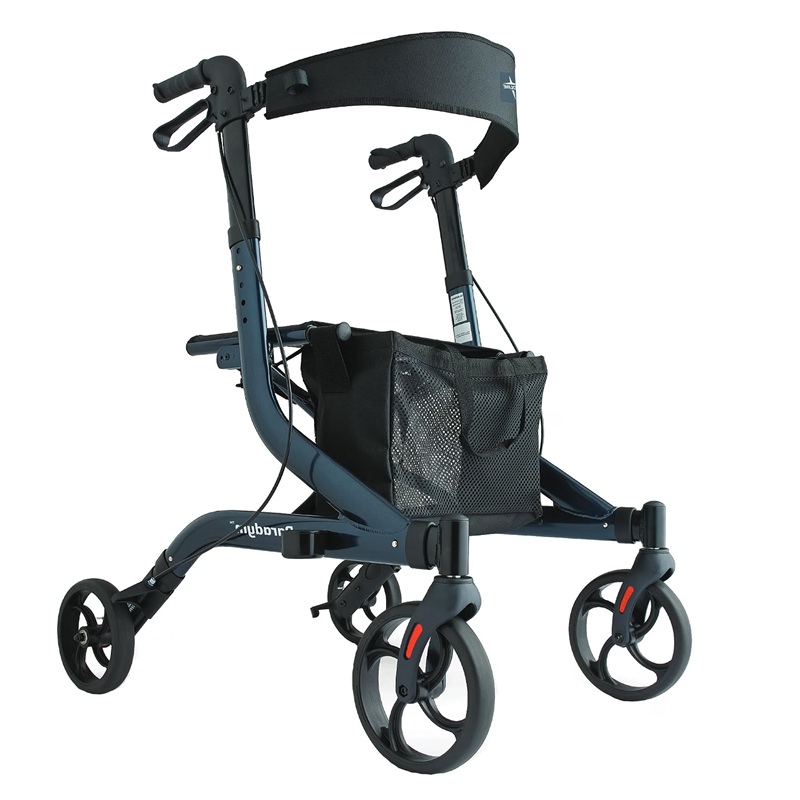
- Weight: about 17 pounds
- 8-inch front wheels and 7-inch rear wheels
- Handle height adjustable from 31 to 36 inches
- Weight limit: 300 pounds
- Seat height: 21 inches, not adjustable
What I like: it holds more weight than the other two and the larger front wheels may roll more easily over small bumps. The frame design also has you stand a bit more between the rear wheels, which some people may find more supportive. Keep in mind: the seat height is fixed, which may not suit everyone. [Add current rating and price.]
Check price on Amazon | Read my full review of lightweight walkers with a seat.
Beach rollator: for sand, gravel, and snow
Best for: people who walk on soft or uneven surfaces.

- Weight: about 25 pounds, powder-coated aluminum frame
- Large wheels: front about 11.8 inches across and 7 inches wide, rear about 9.4 inches across and 4.8 inches wide
- Polyurethane tires
- Handle height adjustable from 34 to 39 inches
- Folds for storage and transport
What I like: standard small wheels get stuck in sand, and these wide wheels are designed to handle it. They also work on gravel, snow, and other soft ground. Keep in mind: it is heavier than the others and the price is higher. Some beaches rent rollators, so call ahead before you buy. [Add brand name, current rating, and price.]
Check price here | Read my full review of the beach rollator walker.
How to choose the best rollator for seniors
Fit: seat height and handle height
Handles that are too low or too high lead to strain and poor posture. When you stand upright with your arms relaxed, the handles should be about level with the crease of your wrist, with a slight bend in your elbow. Check that the seat height also suits you. A physical therapist can set this properly.
Weight and weight limit
Lighter rollators are easier to lift, but they often have a lower weight limit. Check the rated capacity against your own weight. Many standard models list limits around 250 to 300 pounds, and heavy-duty models are available if you need more.
Wheels and where you will use it
Smaller wheels turn more easily indoors, while larger wheels roll better over cracks, curbs, and uneven ground. If you walk mostly outdoors or on soft surfaces, larger wheels are worth it.
Brakes
Hand brakes should be easy to squeeze and should lock reliably. Check that you can use them comfortably, especially if you have arthritis or weak grip. If you cannot control the brakes, a rollator is not the right choice.
Seat and backrest
A seat lets you rest when you get tired. Make sure it is wide and sturdy enough, and that the backrest is comfortable. A seat is for short rests, not for riding.
Size, folding, and car transport
Measure your doorways, especially the bathroom, and check the width of the rollator. If you lift it in and out of a car, try the folded weight and the folding mechanism. See my posts on a swivel car seat and car door assist handle for easier car transfers.
Rollator safety tips
- Always lock the brakes before you sit down or stand up.
- Do not use a rollator on stairs or escalators.
- Do not use it as a wheelchair, and do not let anyone ride on it.
- Do not overload the basket or bag, which can make it tip.
- Check tires, brakes, and folding parts regularly.
- Clear loose rugs and clutter. See my home safety checklist and bathroom safety guide.
A rollator is not right for everyone. If you need to lean heavily on your device, a standard walker is usually safer, because a rollator can roll away from you. My guide to cane vs walker vs rollator explains the difference. If you are recovering from surgery, see my posts on hip replacement and knee replacement and follow your therapist’s advice.
Rollator accessories
Baskets, bags, trays, cup holders, and cane holders can make a rollator much more useful. See my full list of rollator walker accessories. Check that anything you add does not make the rollator unstable or interfere with folding.
My experience
When that older family member needed the walker, I did not know how to pick the best rollator walker, and we ended up with a pretty heavy one. That was hard to get in and out of the car. If I had to do it again, I would have picked a lighter one for that reason,
Frequently asked questions
What is the best rollator for seniors?
It depends on your height, weight, and where you will use it. For the lightest option, see the Healthline lightweight rollator. For wide adjustment, see the Medline. For a higher weight limit, see the Medical rollator. For soft ground, see the beach rollator.
What is the difference between a rollator and a walker?
A rollator has wheels, hand brakes, and usually a seat. A standard walker has no wheels and is lifted with each step. A walker is generally more stable, while a rollator makes walking easier.
Can you use a rollator outdoors?
Yes, especially a model with larger wheels. Smaller wheels can struggle on cracks, gravel, and soft ground, and a beach rollator has special wide wheels for sand.
How much weight can a rollator hold?
Many standard rollators list limits around 250 to 300 pounds. Heavy-duty models are available for higher limits, so always check the rated capacity.
How do I know what size rollator I need?
Stand upright with your arms relaxed. The handles should be about level with the crease of your wrist. A physical therapist can fit it exactly.
Will Medicare help pay for a rollator?
Medicare may help pay for certain walkers when a doctor says they are medically necessary, but coverage for rollators and specific features varies. Ask your doctor and check with Medicare or your plan before you buy.
Sources and further reading
- Medicare.gov: coverage for walkers | https://www.medicare.gov/coverage/walkers
- A physical therapy or National Institute on Aging page on choosing a walking aid | https://www.choosept.com/health-tips/tips-safely-use-walking-aids
This page is for general information and is not medical advice. Talk to your doctor or a physical therapist about the right mobility aid and fit for you.
Eddie Vandam
About the Author: Eddie Vandam
Eddie Vandam is a proud senior and retired internet marketer who now dedicates his time to helping others age well. As the voice behind the Senior Citizen Website, he shares practical advice on staying healthy, independent, and informed. From product reviews to wellness tips and hobbies that keep life interesting, Eddie writes with real-world experience and a passion for making senior life easier and more enjoyable.👉 Read more about Eddie Vandam.